
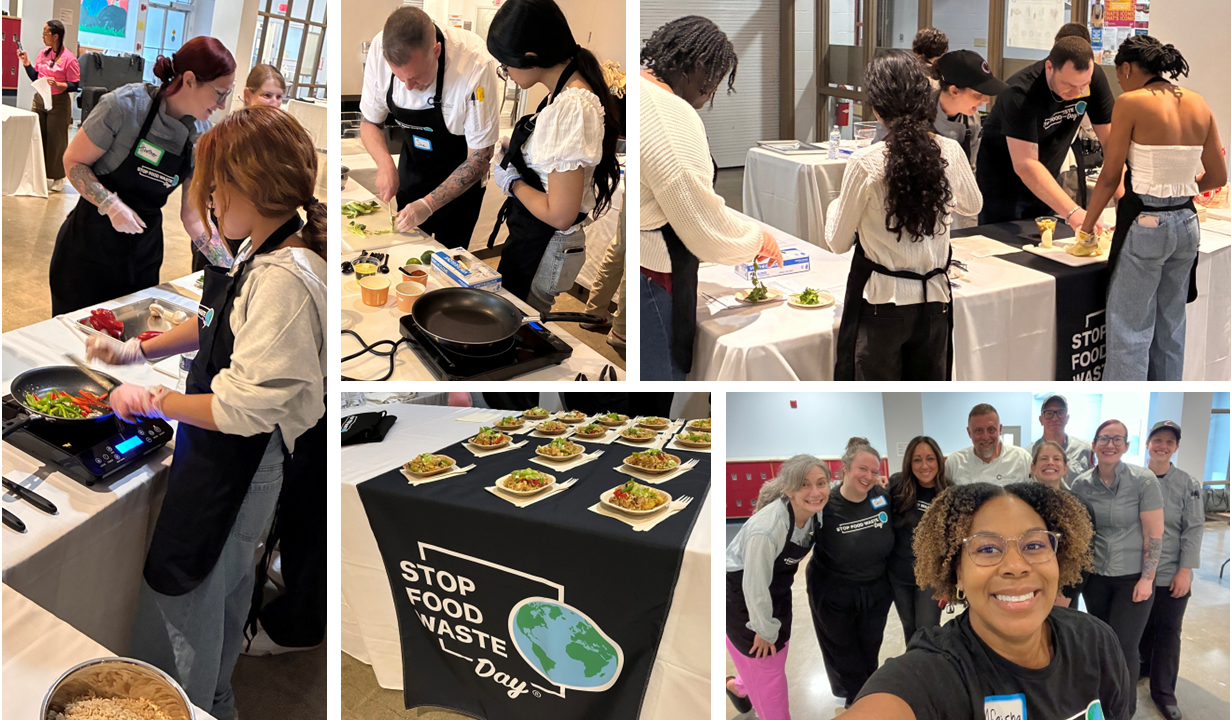
CulinArt leaders ushered in a new generation of Waste Warriors at the Students of Color Conference. Clockwise, from left: Heather McQuaid; Joe Ball; Beth Pytka and Vlad Furman; and the full team (from left) Angie Peccini, Torri Hieber, Ali Bernardi, Ball, Afeisha Harrison (foreground), Stephanie Dorfman, JC Mobriant, McQuaid, and Pytka.
WESTON, MASS., APRIL 18, 2026—CulinArt brought energy, creativity, and purpose to the AISNE High School Students of Color Conference at Regis College earlier this month, hosting interactive culinary workshops and competitions that blended hands-on learning with a powerful sustainability message.
The event, organized by the Association of Independent Schools in New England (AISNE), gathered students from independent schools across the region for a day centered on identity, community, and shared experience. Within that broader mission, CulinArt’s “Waste Warrior Challenge” stood out as a dynamic, Chopped-style culinary competition designed to inspire students to think differently about food—how it is prepared, consumed, and too often wasted.
At the heart of the workshop was collaboration. Students worked in teams, each guided by a CulinArt chef leader—Joseph Ball, director of culinary; Heather McQuaid, regional executive chef; JC Mobriant, district chef; and Beth Pytka, assistant director of dining services at The Wheeler School, in Providence, R.I. Together, they tackled a unique challenge: create a dish using a surprise “secret ingredient” while minimizing waste and maximizing flavor.
The format pushed students beyond basic cooking. Each team divided responsibilities, prepared different elements of their dish, and selected a presenter to explain the final creation—highlighting ingredients, flavor profiles, and, importantly, the sustainability choices behind their work. In a distinctive twist, teams also presented the food waste generated during preparation, reinforcing awareness of how even small decisions impact the bigger picture.
Dishes were evaluated by a judging panel that included Sara Wilson, executive director of AISNE, along with chaperones from participating schools—bringing a mix of organizational leadership and school community perspectives to the competition. Judges scored each team on flavor, plating and appearance, sustainability, creativity, and use of the secret ingredient. Afterward, students had the opportunity to taste each other’s dishes, turning the competition into a shared learning experience.
The atmosphere was equal parts high-energy and reflection. Chef Joe Ball opened each session with a “Safety Moment,” demonstrating proper knife handling, sanitation, and the use of protective equipment—setting a professional tone while emphasizing responsibility in the kitchen. Meanwhile, event emcees Stephanie Dorfman, MS, RDN, director of wellness and sustainability, and Angie Peccini, manager of culinary development, kept the sessions engaging and educational.
A standout moment from the competition came from Chef Joseph Ball’s team, which not only delivered exceptional flavor but also produced the least amount of food waste. Their edge came from a creative, sustainability-driven seasoning that transformed scraps into something extraordinary. Chef Ball introduced a “Waste Not” spice blend made from typically discarded ingredients—onion peels and tomatillo husks—carefully dried and ground into a flavorful powder, then combined with spices to create a custom taco-style seasoning. The innovation elevated the team’s dish while demonstrating a powerful concept: what’s often considered waste can become a key ingredient with the right approach.
Behind the scenes, a broader team of CulinArt leaders and supporters helped bring the experience to life, including Torri Hieber, director of dining services at The Wheeler School; Vlad Furman, district manager; Ali Bernardi, vice president of marketing and strategy; and Afeisha Harrison, director of business development.
For Harrison, the day carried deep personal meaning. Reflecting on the experience, she shared: “Participating in the AISNE High School Students of Color Conference was deeply personal for me. As the only Black girl in my class at my independent school, I often felt unseen and unheard. Being there with CulinArt and witnessing the joy, connection, and confidence among the students as they competed together in the Waste Warriors challenge was moving.”
The workshop also served as a timely lead-in to Stop Food Waste Day (SFWD), observed annually on April 29. The global day of action focuses on reducing food waste, encouraging smarter food use, and shifting behaviors at home, in schools, and across the foodservice industry.
The stakes are significant. In the United States, an estimated 30–40% of the food supply is wasted, representing tens of millions of tons of food and hundreds of billions of dollars annually. Beyond the economic impact, food waste contributes heavily to landfill volume and environmental strain—while simultaneously representing a missed opportunity to address food insecurity.
By integrating these realities into a hands-on, student-driven competition, CulinArt transformed abstract statistics into tangible understanding. The “Waste Warrior Challenge” encouraged participants to see waste not as an afterthought, but as a central consideration in how food is sourced, prepared, and enjoyed.
Ultimately, the workshop was about more than cooking. It was about empowerment—giving students the tools, confidence, and awareness to make more sustainable choices, while celebrating culture, collaboration, and creativity.
As Stop Food Waste Day approaches, initiatives like this highlight how education and experience can spark meaningful change. For the students at AISNE, the lesson was clear: small actions in the kitchen can have a big impact on the world beyond it.
From plant-forward creations to globally inspired flavors, each team brought a unique perspective to the competition—elevated by a surprise ingredient that tested their creativity and adaptability in real time.
Dishes:
· Team Joe Ball—Cauliflower Steaks with Salsa Verde
· Team JC Mobriant—Tofu Spring Roll with Honey Soy Ginger Dipping Sauce
· Team Heather McQuaid—Red Rice and Quinoa Stir Fry with Chicken and Root-to-Stem Veggies
· Team Beth Pytka—Chickpea “Chorizo” Corn Tostada with Pickled Cauliflower Broccoli Stem Salad and Jicama De Gallo
Surprise Ingredients:
· Team Joe Ball took on jicama, assigned by Chef Beth
· Team Beth Pytka received a fresh bundle of basil from Chef JC
· Team JC Mobriant was put to the test with quinoa by Chef Heather
· Team Heather McQuaid was challenged by Chef Joe to utilize cauliflower leaves and stem